Keyword Research
E-E-A-T in SEO: The Complete 2026 Guide
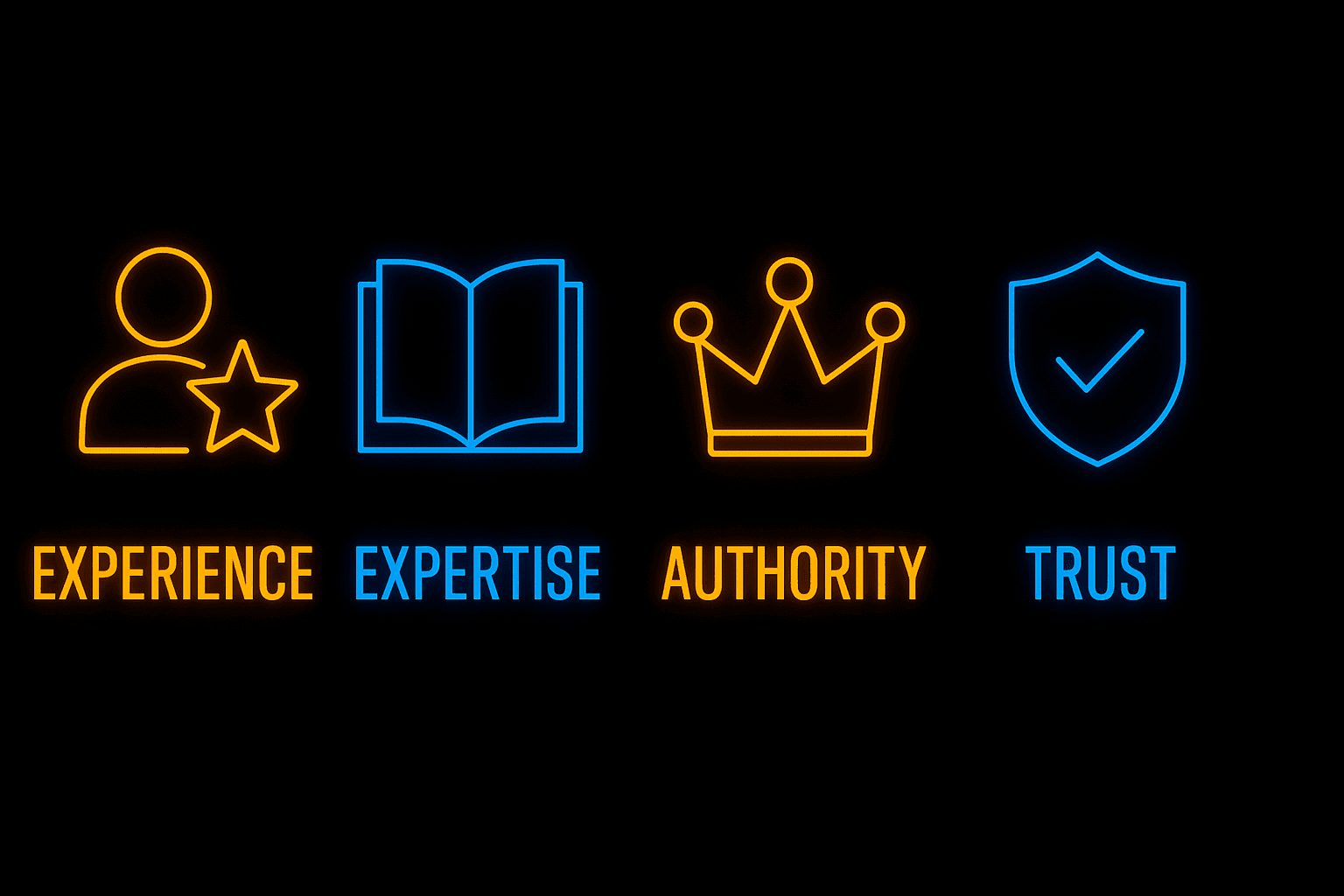
E-E-A-T gets quoted as if it's a dial in Google's algorithm. It isn't. Google's own words: "While E-E-A-T itself isn't a specific ranking factor, using a mix of factors that can identify content with good E-E-A-T is useful" (Google Search Central). After the December 2025 core update, that distinction matters more than ever. This is what E-E-A-T actually is, what changed, and what "good E-E-A-T" looks like for a B2B SaaS team that doesn't have a 50-person editorial masthead.
Key Takeaways - E-E-A-T is not a ranking factor. It's a framework Google's rater guidelines use, and the guidelines themselves "don't directly influence ranking" (Search Engine Land, 2022). - Trust is the center of the family: "trust is most important. The others contribute to trust" (Google). - The December 2025 core update rolled out over ~18 days, the longest of 2025's three core updates (March ~14, June ~16) (Glenn Gabe/GSQI, 2025). Google keeps tightening the same thing: is this content actually useful and trustworthy? - Author bylines don't directly help you rank, and Google doesn't verify credentials (Google via Search Engine Roundtable). Do them for readers, not for a trick.
What E-E-A-T is, and what it definitely isn't
E-E-A-T stands for Experience, Expertise, Authoritativeness, and Trustworthiness. The first E, Experience, was added in December 2022 via an update to Google's Quality Rater Guidelines, so raters now also consider whether content shows first-hand or life experience with the topic (Google Search Central, 2022). And the four don't carry equal weight. Google says it plainly: "Of these aspects, trust is most important. The others contribute to trust, but content doesn't necessarily have to demonstrate all of them" (Google). Experience, expertise, and authority are inputs; trust is the output.
Here's the part people skip. The Quality Rater Guidelines are not the algorithm. Google uses raters to evaluate whether changes to its ranking systems are working, and the guidelines "don't directly influence ranking" (Search Engine Land, 2022). So when someone tells you "fix your E-E-A-T to rank," they're using a useful shorthand for "make your content the kind a careful human would judge as trustworthy and made by someone who knows the subject." That's the right instinct. There's just no E-E-A-T slider in Search Console.
What changed after the December 2025 core update
Nothing got added as a "ranking factor." What happened is the same thing that's been happening since 2024: Google kept tightening the screws on "is this content actually useful, original, and trustworthy?" The December 2025 core update rolled out from December 11 to December 29, about 18 days, the longest of 2025's three core updates, with a two-wave volatility pattern (Search Engine Roundtable, 2025). And 2025's updates got progressively longer: March around 14 days, June around 16, December around 18 (Glenn Gabe/GSQI, 2025). Longer rollouts suggest bigger, more interdependent changes to how Google weighs quality.
Step back to 2024 for the throughline. The March 2024 core update came with a stated goal of reducing "low-quality, unoriginal content" in results by 40%; Google's April follow-up said it actually achieved 45% (Google, 2024). The same update absorbed the standalone Helpful Content System into Google's core ranking systems (Google Search Central). So "helpful, people-first content" stopped being a separate signal and became part of the main machinery. Every core update since has been a refinement of that, not a new lever. If your content lost ground in December 2025, the diagnosis is almost never "we forgot a schema tag." It's "a more demanding version of the quality bar got applied."
What author bylines actually do for SEO
Author bylines do not directly help you rank, and Google does not verify credentials for ranking purposes. Google's Search Liaison has said exactly that: "author bylines aren't something you do for Google, and they don't help you rank better." But the same statement adds that sites which show clear authorship "may exhibit... other characteristics our ranking systems find align with useful content" (Google via Search Engine Roundtable). Read that carefully: the byline isn't the signal; it's correlated with the signals. Sites that bother to put a real, accountable person's name on the work tend to also be the sites that fact-check, update, and care.
So put bylines on your content because readers trust named humans more than anonymous "Team" attributions, and because it forces accountability internally. Don't bolt fake author personas onto AI-generated posts and call it E-E-A-T; that's exactly the kind of thing the rater guidelines are written to catch. And here's where small teams have an advantage rather than a handicap: you don't need a stable of credentialed contributors. You need one real person who has actually done the thing the post is about. A solo founder who's run the audits, shipped the product, made the mistakes is a stronger Experience signal than a faceless agency byline. We've broken down the five trust signals that let solo founders outrank anonymous agency content separately.
AI content vs E-E-A-T: what actually matters
The wrong thing to ask is "did AI write this?" Google's position is technology-agnostic: the violation is "producing content at scale to boost search ranking, whether automation, humans, or a combination are involved" (Google, 2024). AI assistance isn't penalized; scaled, low-effort content is, regardless of who or what produced it.
The right question is "does this add anything?" Google's January 2025 update to the Quality Rater Guidelines added a formal definition of generative AI and told raters to assign the "Lowest" page-quality rating when "all or almost all of the main content... is auto or AI generated... with little to no effort, little to no originality, and little to no added value" (Search Engine Land, 2025). The operative words are effort, originality, added value. Across roughly 14 billion pages, 96.55% get zero organic traffic from Google (Ahrefs, 2023). Ranking is a tournament you only enter if your content has something the other entrants don't, which is why "information gain" beats "production method" as the thing to obsess over. For the constructive version of that argument, see what "content is king" actually means in 2026.
YMYL: when the bar is higher
Your Money or Your Life topics, health, finances, safety, civics, and content about groups of people, get the highest quality scrutiny in Google's rater guidelines, because low-quality pages there can genuinely harm someone's health, finances, or safety (Google Quality Rater Guidelines). One thing to be skeptical about: Google has never published a "what percentage of queries are YMYL" figure, so if you see one quoted with a precise number and no Google source, treat it as invented. For most B2B SaaS content you're not in YMYL territory. But if your product touches finance, security, healthcare, HR, or legal, write as if you are: more sourcing, more caution, clearer authorship, a named expert who'd stand behind every claim.
The Who / How / Why test
Google's own helpful-content guidance gives you a self-assessment, and it's a better checklist than anything an SEO tool will sell you. Three questions:
Who created this content? Is it self-evident to a visitor who wrote it and why they're qualified? If your byline is "Admin" or there's no author at all, you're failing the easiest one.
How was it created? If you used AI or automation in a meaningful way, is that self-evident through a disclosure or otherwise? Hidden mass-production is the thing the guidelines flag.
Why does it exist? Is it primarily to help people, or primarily to rank in search? Be honest. Content built backwards from a keyword, with no point of view and nothing a competitor doesn't already say, fails the why.
If a post passes Who, How, and Why with answers you'd be comfortable defending to a customer, you've done the substance of E-E-A-T. The rest is implementation detail.
What "good E-E-A-T" looks like in practice
Concretely, for a B2B SaaS site:
A real, named author on every substantive post, with a short bio that says why they're qualified, linked to a genuine author page.
First-hand experience markers: data you collected, a process you ran, a mistake you made and what it cost. The stuff a competitor literally cannot copy because they didn't do it.
Citations to primary sources, not to other blog posts that cite other blog posts. (Google's docs, original studies, the actual data.)
Visible publish and last-updated dates, and updates that are real, not a date change.
An honest About page: who runs the company, where it's based, how to reach a human.
Third-party signals: reviews on G2 or Clutch, mentions in industry roundups, a real presence beyond your own domain.
No scaled thin content. If you can't make a page genuinely more useful than what's already ranking, don't publish it; it drags the perceived quality of the whole section.
Frequently Asked Questions
Is E-E-A-T a Google ranking factor?
No. Google has said directly that "E-E-A-T itself isn't a specific ranking factor," though "using a mix of factors that can identify content with good E-E-A-T is useful" (Google Search Central). It's a framework in the Quality Rater Guidelines, and the guidelines themselves don't directly influence ranking. Treat E-E-A-T as a description of what trustworthy content looks like, not a setting you can adjust.
Do author bios help SEO?
Not directly. Google's Search Liaison has said author bylines "don't help you rank better" and Google doesn't verify credentials. But sites that show clear authorship "may exhibit... characteristics our ranking systems find align with useful content" (Google via Search Engine Roundtable). So bios are correlated with the things that do matter. Add them for readers and for accountability, not as a ranking hack, and never fake them.
Does Google penalize AI-generated content?
Not for being AI-generated. Google's policy targets "producing content at scale to boost search ranking," whether by automation, humans, or both (Google, 2024). The January 2025 rater guidelines do tell raters to give the "Lowest" rating to content that's almost entirely AI-generated "with little to no effort, little to no originality, and little to no added value" (Search Engine Land, 2025). The line isn't AI versus human; it's effort and added value versus scaled filler.
What does YMYL mean?
Your Money or Your Life: topics where low-quality content could harm a person's health, financial stability, safety, or the welfare of society, including health, finance, civics, safety, and content about groups of people. Google's rater guidelines apply the strictest quality scrutiny to YMYL topics (Google Quality Rater Guidelines). Google has not published a percentage of how many queries are YMYL, so be wary of any source that quotes one.
Did the December 2025 core update target E-E-A-T?
Core updates don't "target" E-E-A-T as such; they recalibrate how Google's systems judge overall content quality, and E-E-A-T-ish signals (trust, expertise, original value) are part of that. The December 2025 update was a broad core update that rolled out over about 18 days, the longest of the year (Search Engine Roundtable, 2025). If you dropped, the fix is the slow one: genuinely better, more trustworthy, more original content, not a technical tweak.
The bottom line
E-E-A-T isn't a knob. It's Google's shorthand for "content a careful person would trust, made by someone who actually knows the subject." After the December 2025 core update, that bar is a little higher, the way it's been getting a little higher with every core update since 2024. The work is the same as it's always been: a real author, real experience, real sources, real reasons for the page to exist. Skip the byline-faking and the "E-E-A-T audit" tools and just be the legitimate version.