SEO
Voice Search Is Dead. AI Search Killed It.

What was voice search SEO actually solving?
Voice search, as a distinct SEO discipline, is effectively dead in voice search 2026. Not because people stopped speaking to devices. Because every major platform rerouted spoken queries through AI. Google AI Overviews, Apple's Siri-to-ChatGPT handoff, and Amazon's Alexa rebuild all answer voice queries without a classic voice search ranking signal in the loop. If you are still running a separate "voice SEO" workstream next year, you are measuring a category that the platforms themselves have retired.
Key Takeaways
Apple, Amazon, and Microsoft replaced their voice search pipelines with AI answer engines between November 2023 and October 2024.
Only 25% of users would consider voice search for business queries, per DemandSage, capping the B2B opportunity structurally.
Voice search use cases skew local: restaurants 51%, grocery 41%, food delivery 35%. Not procurement, not SaaS comparison.
Voice search optimization and AI citation optimization now share roughly the same tactic set (FAQ schema, direct answers, conversational phrasing).
Stop tracking voice search as a separate metric. No platform exposes voice-specific ranking data anymore.
We published our own voice search guide eighteen months ago. That post is not wrong. This one updates where the tactics live in the strategy stack.
From roughly 2017 to 2022, voice search SEO existed to own one thing: the single result a smart speaker would read aloud. Position Zero was the target. Capture the featured snippet, win the audio answer, and the Google Home in someone's kitchen would recite your sentence. According to DemandSage's adoption data, 89% of users find voice search more convenient than typing, which is exactly why the optimization category existed in the first place.
The tactic set was tight: conversational keyword targeting, FAQ schema, short direct answers in opening paragraphs, snippet capture. None of those tactics are wrong in 2026. They are just no longer voice-specific. They serve a different reader now, which happens to be an LLM rather than a Siri-to-SERP pipeline.
Did AI search actually kill voice search?
Yes, as a category. Voice input survived. Voice search did not.
Three platform decisions made that distinction real. Microsoft discontinued Cortana as a standalone product in November 2023. Amazon announced a generative AI rebuild of Alexa positioned as a replacement for the legacy assistant architecture. Apple shipped iOS 18 in October 2024 with Siri routing complex queries directly to ChatGPT. These are not incremental updates. They are the three vendors that owned the voice-search-to-SERP pipeline collectively replacing it with an AI-answer pipeline. Semrush's AI search trends analysis frames this as queries getting longer and more complex, which is the symptom you would expect when the answer engine changed.
The distinction worth holding onto: voice input (speaking to a device) is healthier than ever. Voice search (fetching a SERP and reading the top result aloud) is the part that died. When you ask Siri a real question in 2026, you are not getting a Google result read back. You are getting an LLM answer. That is a different optimization target with a different ranking logic, and it sits squarely inside the broader shift we mapped in AI in SEO 2026.
What do the usage numbers actually show?
The convenience numbers are real and they are misleading. DemandSage reports that 71% of users prefer voice assistants over typing, 89% find voice more convenient, and 90% believe voice search is easier than traditional search. None of those figures tell you whether voice search matters as a B2B traffic channel. Convenience preference and commercial search intent are different metrics, and the commercial intent in voice queries is almost entirely local.
Look at where voice search usage actually concentrates by category:
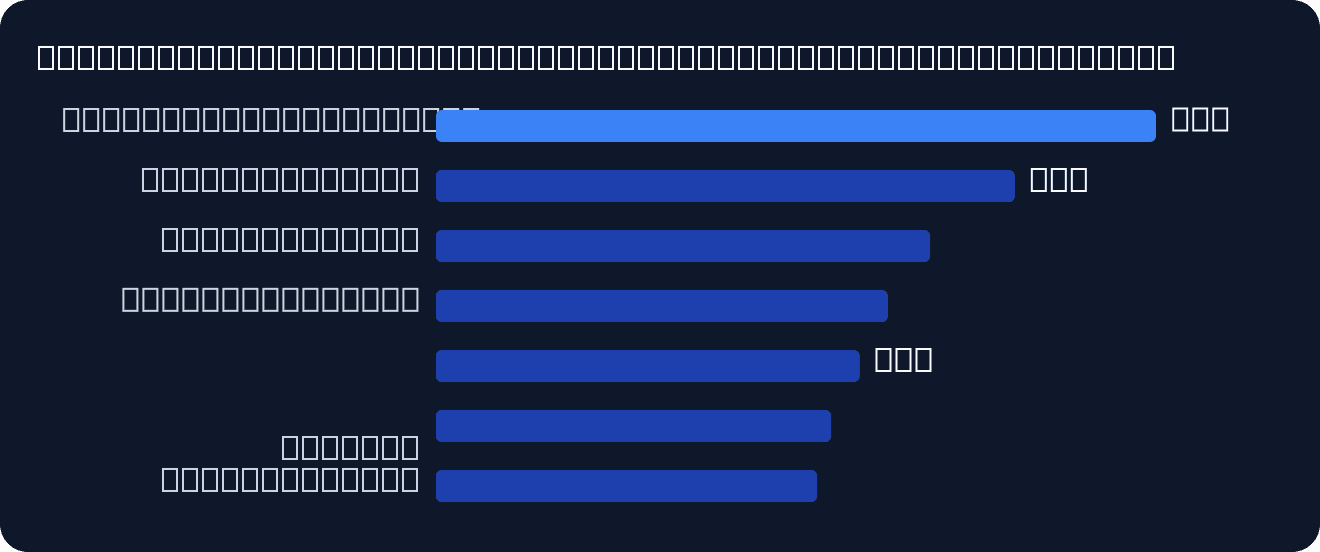
These are the categories where users actually speak a search out loud. Restaurants, groceries, food delivery, clothing. The list is local, transactional, and immediate. Nobody is asking their smart speaker to compare two ISO 27001 audit vendors or evaluate a procurement contract clause. The ceiling on B2B voice search is structural: only 25% of users would consider voice search for business queries at all, per the same DemandSage dataset.
Complex B2B research routes through AI chat now. The voice-input version of that research still exists, but it terminates inside ChatGPT or Perplexity, not on a SERP that a smart speaker reads back.
Are voice search and AI search the same optimization target?
For practical purposes, yes. The tactical overlap is close to complete.
Both reward structured, direct answers. Both use FAQ schema. Both require the answer in the first paragraph before supporting detail. Both reward natural, conversational phrasing over keyword-stuffed prose. Treating them as separate workstreams in a quarterly plan wastes planning time and confuses prioritization. The difference is not the tactics. It is what you measure afterward.
Here is the old voice-search tactic set translated into what that work actually does in 2026:
Old voice search tactic | What that work actually does in 2026 |
|---|---|
Target conversational long-tail keywords | Matches natural language patterns in AI queries |
Capture featured snippets | Improves eligibility for AI Overview citations |
Implement FAQ schema | Feeds structured Q&A to LLM extractors |
Write direct answers before supporting detail | Satisfies AI passage extraction requirements |
Optimize for mobile voice queries | Covers AI interfaces on all devices, including voice input |
Speakable schema is the one remaining voice-specific signal, and its ROI is marginal outside news and recipe publishing. FAQ, HowTo, and QAPage schema types serve AI extractors and voice results simultaneously. The framing shift from "voice SEO workstream" to "AI citation optimization" changes what gets prioritized, who owns it, and how it gets reported. We argued the same point from a different angle in AEO vs GEO vs LLMO: the acronyms differ, the work converges.
What should you stop doing in voice search 2026?
Stop tracking voice search as a separate metric. No major platform exposes voice-specific ranking data, so the dashboard you are building is measuring nothing concrete. Stop labeling FAQ pages and conversational content as "voice search optimization" in your internal reporting. The label misaligns team priorities and gives executives a category that the platforms themselves no longer support.
Keep the tactics. Relabel them. FAQ schema, structured direct answers, conversational keyword coverage, Position Zero capture, all of it still works. It just belongs under GEO or AEO now, not a voice SEO line item. The work you were doing for smart speakers in 2021 is the same work that wins ChatGPT citations in 2026, which is the broader argument we made in AI in SEO 2026.
Add the measurement that actually matches the new reality: AI citation tracking across ChatGPT, Perplexity, and Google AI Overviews. That is where spoken queries terminate now. Without it, you have a content workstream with no feedback loop. We walked through the mechanics in AI Search Tracking, including which tools surface which platforms and where the gaps still are.
Frequently Asked Questions
Is voice search still relevant in 2026?
Voice input remains relevant. Voice search as a distinct SEO category with its own ranking signals is not. Spoken queries route through AI interfaces (Siri to ChatGPT, Alexa generative rebuild, Google AI Overviews) rather than a classic voice SERP. Optimizing for AI citations covers the voice use case without a separate workstream.
What is the difference between voice search and AI search?
Voice search returned a single read-aloud result pulled from a featured snippet, via Google or Alexa. AI search synthesizes an answer from multiple sources and cites them, via ChatGPT, Perplexity, or Google AI Overviews. The input method (speaking) can be identical. The answer mechanism is entirely different.
Is voice search dying?
As a traffic channel with its own ranking logic, yes. DemandSage data shows only 25% of users would consider voice search for business queries, and the platform investment from Google, Apple, and Amazon has shifted to AI answer interfaces rather than improvements to classic voice SERP pipelines. The behavior (speaking) survives. The channel structure does not.
The category died, the tactics survived
The 2022 voice search SEO playbook was not wrong. It was correct for its moment. The 2026 version of that same work lives inside GEO and AEO, not a separate voice SEO workstream. If you are still running it under the old label, the output is probably fine, but the measurement and prioritization are off. If your AI citation rate is growing, your voice search coverage improves automatically. You cannot measure the two separately anymore, because they are the same thing.
Most B2B sites we audit are still running content under labels that stopped matching the platforms two years ago. The same drift shows up in adjacent areas we have covered in E-E-A-T in SEO and Technical SEO for B2B SaaS, where the tactics are fine but the framing is two years stale. If you want a specific read on which fixes are draining your traffic, book a Free SEO Audit Call. Thirty minutes, concrete findings, no slide deck.