SEO
The /llms.txt Standard: Should You Implement It?
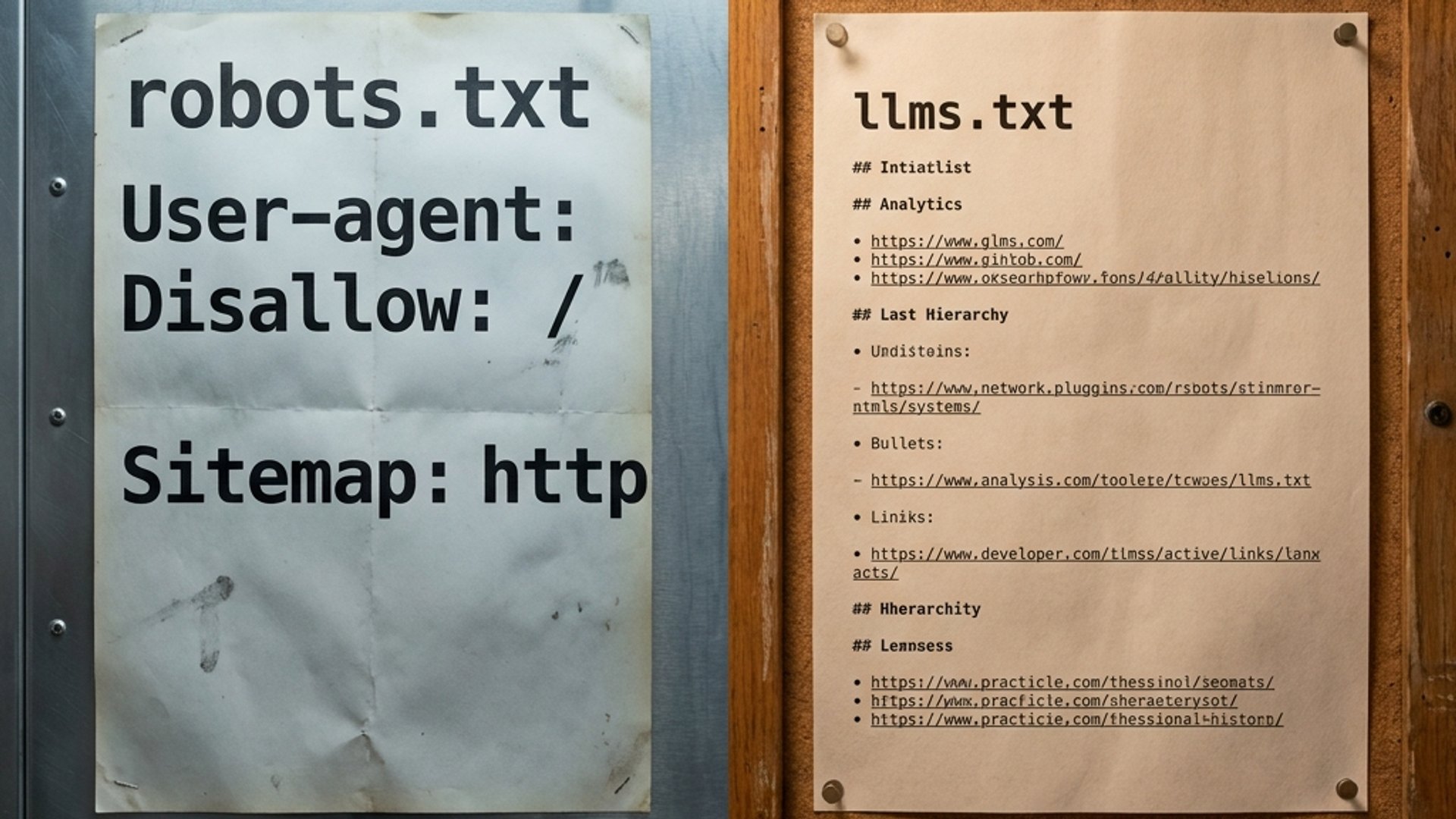
What an llms.txt file actually does
An llms.txt file is a plain-text Markdown document placed at your domain root that signals to AI systems which pages you want them to prioritize when reading your site. It does not block crawlers, it guides them. Proposed by Jeremy Howard of Answer.AI in September 2024, the format is already supported natively by Mintlify and Wix.
Key takeaways
An llms.txt file is a Markdown reading guide for AI crawlers, not a gate. It guides priority. It does not block access.
Writing one for a typical B2B SaaS site takes under 30 minutes with no tooling beyond a text editor.
llms.txt and robots.txt do different jobs. One controls access. The other shapes understanding. Both belong on your site.
Compliance is voluntary in 2025, but a dated file on record creates a documented preference signal as the EU AI Act enforcement develops.
Whether the file works yet is a fair question. Whether you should implement it now is not. The post below takes a position most explainers avoid: write the file this week, even though the spec has no teeth.
How does the format work in practice?
The file lives at yourdomain.com/llms.txt and uses plain Markdown rather than the key-value directives in robots.txt. An optional companion file, /llms-full.txt, embeds the full text of each linked URL. That second file matters most for SaaS products with developer documentation, where AI systems benefit from inlined reference material instead of a second hop. Mintlify auto-generates both files for documentation sites, which is one reason the format is spreading faster than its formal status would suggest.
If you have read our breakdown of AEO vs GEO vs LLMO, the underlying logic here is the same. AI systems need structured input to surface your content, and llms.txt is one of the cleanest input formats available right now. It also pairs naturally with the broader shifts we cover in AI in SEO 2026.
How does llms.txt differ from robots.txt?
robots.txt restricts crawler access using directives that most compliant bots respect. llms.txt guides AI reading priority through voluntary Markdown formatting, with no enforcement mechanism in the current spec. The two files solve different problems and should both exist on your site.
They are often confused because they sit in the same location and look superficially similar. robots.txt is governed by IETF RFC 9309, a formal protocol with three decades of crawler implementation behind it. llms.txt is a community proposal from Answer.AI with no standards body. Treating them as substitutes is the fastest way to misconfigure both.
Dimension | robots.txt | llms.txt |
|---|---|---|
Primary purpose | Block or allow crawler access | Guide AI content prioritization |
Enforcement | Respected by most compliant bots | Voluntary, no standard enforcement |
Format | Directive key-value pairs | Markdown with labeled links |
Read by | Search and general crawlers | LLM training and inference crawlers |
Can block content | Yes (if crawler complies) | No |
Standards body | IETF RFC 9309 | Community-proposed (Answer.AI) |
Misconfiguring robots.txt already creates SEO and security exposure most site owners never audit. We covered that pattern in SEO Security: Why Your robots.txt Is a Backdoor. Adding an llms.txt file does not fix a leaky robots.txt. Fix that first.
Inconsistently, and no major LLM provider has published binding compliance documentation for the format as of late 2025. Some AI crawlers acknowledge guidance files. Others operate under independent crawl policies that make no reference to the spec. The original Robots Exclusion Protocol was proposed by Martijn Koster in 1994 and ignored by many crawlers for years before consensus formed. It was only formally standardized as RFC 9309 in September 2022, nearly three decades after the first draft. Voluntary signals often turn into standards once a critical mass of sites send them, and the cost of sending one early is essentially zero.
Anthropic publishes more detail on ClaudeBot behavior than most providers do in its crawler documentation. OpenAI's GPTBot and Google-Extended operate under their own crawl policies, with no formal llms.txt commitment from either. That is the same "signal without guarantee" position schema markup occupied in 2013 before rich snippets became the SERP default. Sites that adopted early captured visibility before competitors noticed the option existed.
Should you implement llms.txt before enforcement arrives?
Yes. Implementing llms.txt now costs almost nothing and produces a small but real advantage: AI crawlers that do read the file index your content more efficiently, which affects what surfaces in AI-generated answers. Setup time for a typical B2B SaaS site is under 30 minutes, no tooling required. Wix now generates a basic llms.txt automatically for every site on its platform, which means the baseline expectation is shifting from "advanced setup" to "default."
Across the B2B SaaS sites we audit at Gravidy, the ones with cleanly labeled content hierarchies, sitemaps and descriptive titles get cited more consistently in AI Overviews than sites with equivalent content and messy structure. llms.txt is the next layer of that same idea. We documented the citation pattern in Getting Cited by ChatGPT: 90 Days of Citation Tracking Data, and the click-through impact in Google AI Overviews: How They Affect B2B Click-Through. The schema analogy is worth sitting with. Sites that added structured data in 2014 captured rich snippets before their competitors caught up, and most of those rankings compounded for years afterward.
How do you write a minimal llms.txt for B2B SaaS, and why does consent matter?
A functional llms.txt has three components: a one-paragraph site description, a labeled list of priority URLs, and an optional section for lower-priority pages. For most B2B SaaS sites, a text editor and 20 minutes produces a file that covers every page that matters.
The minimal structure looks like this:
Include your service pages, your product documentation, your highest-intent blog content, and your about and contact pages with one line of descriptive context next to each link. Skip thank-you pages, paginated duplicates, staging environments and redirect chains. For developer-facing SaaS, publish /llms-full.txt with the full page text rather than only URLs. Pair the file with structured data, because llms.txt without schema is half the signal.
llms.txt also documents your stated preference about how AI systems use your content. If an AI provider later claims crawling was opt-in by default, a dated llms.txt on file creates a record of your intent. Under the EU AI Act and evolving GDPR interpretations, that record carries weight it would not have carried two years ago. A related informal proposal called ai.txt focuses specifically on training-data consent rather than crawler guidance. The two can coexist at your domain root, and they do not conflict. Article 53 of the EU AI Act already requires general-purpose AI providers to document copyright compliance, and site-level preference signals are a plausible part of that documentation chain as enforcement develops.
For B2B SaaS companies with proprietary research, original datasets, or licensed documentation, expressing a documented crawl preference now takes 20 minutes and may save a much longer dispute later. This is not legal advice. Consult a GDPR or AI Act specialist for your specific situation. The consent angle is the one area where doing nothing has a downside beyond search visibility.
Frequently Asked Questions
What is an llms.txt file?
An llms.txt file is a plain-text Markdown file placed at your domain root that tells AI crawlers which pages to prioritize when building an understanding of your site. It supplements your XML sitemap and robots.txt but serves a different function: it is a reading guide for AI systems, not a crawl gate.
Do AI bots actually respect llms.txt?
Some do, partially. Anthropic publishes crawler documentation that goes further than most providers. OpenAI and Google have not published formal compliance commitments to the spec as of late 2025. Treat it as a signal worth sending early, not as guaranteed enforcement.
What is the difference between llms.txt and robots.txt?
robots.txt restricts crawler access and carries real enforcement under RFC 9309. llms.txt guides AI reading priority through voluntary Markdown formatting and has no built-in enforcement. The first controls access, the second shapes understanding, and neither replaces the other.
So, should you implement llms.txt?
llms.txt is not a ranking factor today, and it may never be one in the way "ranking factor" is usually defined. What it does do is give AI systems a clean reading order for your site at the moment they are building the indexes that decide which sources get cited in answers. That work is happening right now, with or without your input.
Most B2B sites we audit have a handful of AI-readiness gaps sitting in plain sight: missing llms.txt, schema gaps, a robots.txt that quietly leaks staging URLs. If you want a specific list of what is draining your visibility before competitors close the same gaps, book a Free SEO Audit Call. Thirty minutes on a video call, written findings sent the same week.